

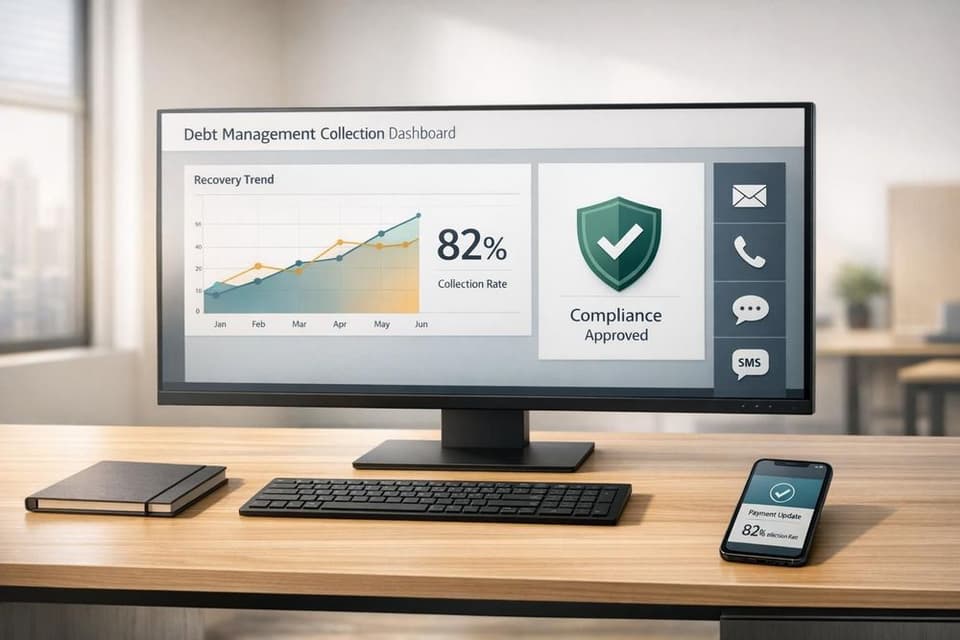
Debt management collection is evolving rapidly, driven by the need to recover debts more efficiently as U.S. household debt hit $17.5 trillion in late 2023. AI-powered platforms now replace outdated methods like phone calls and generic letters, offering smarter tools to prioritize accounts, automate communication, and reduce costs. Key benefits include:
- Higher recovery rates: AI-driven strategies improve recovery by 10-15%.
- Lower costs: Automation cuts operational expenses by 40-60%.
- Better engagement: Digital outreach sees 3–5x better response rates compared to traditional methods.
- Compliance safeguards: Built-in tools ensure adherence to regulations like FDCPA and TCPA.
Modern platforms also integrate real-time analytics, secure communication tools, and seamless system compatibility, making debt recovery faster and more effective. For businesses, this shift turns collections into a scalable, data-driven process that balances automation with human expertise.
AI-Powered Debt Collection: Key Statistics and Benefits
AI-Powered Debt Collection: Key Statistics and Benefits
Smarter, Faster, Compliant: How to Use AI in Debt Collection | Ep. 5
Proven Debt Collection Strategies
The shift from outdated dialing methods to precision recovery is revolutionizing how debt buyers approach collections. With 75% of Americans ignoring calls from unknown numbers, relying on phone-based strategies is no longer effective. Today, the most successful collection efforts focus on three key strategies: AI-driven account prioritization, multi-channel communication, and intelligent portfolio segmentation paired with workflow automation. Let’s dive into how these methods are changing the game.
AI-Based Account Prioritization
AI systems analyze over 100 factors - like payment history and behavioral patterns - to rank accounts based on recovery potential rather than just how long they've been delinquent. This approach ensures that collection teams target accounts most likely to respond to specific strategies. These platforms also track "collection triggers" - life events such as starting a new job or making a credit inquiry - to reprioritize dormant accounts for immediate follow-up. As Moveo AI puts it:
"What the system forgets, the business never recovers".
AI doesn’t just prioritize accounts - it also streamlines operations. By automating routine outreach for early-stage arrears, human agents can focus on more complex cases that require empathy and negotiation. This balance between automation and human expertise boosts overall efficiency.
Multi-Channel Communication Methods
The industry is shifting from multi-channel (separate platforms for different communication methods) to omnichannel strategies that unify touchpoints like SMS, email, voice, and self-service portals. This creates a seamless and consistent experience for the customer. The change aligns with consumer preferences: 56% prefer email or SMS over phone calls for debts under $1,000.
Digital communication has proven to be far more effective than traditional methods. Outreach through digital channels increases the likelihood of payment by 30% compared to older approaches. For instance, 73% of customers contacted digitally for overdue accounts made at least a partial payment, while only 50% did so through traditional channels. AJ Travagline, Senior Consultant at FICO, highlights this shift:
"Automated technology actually empowers the customer and eliminates the embarrassment most feel when speaking with a live agent during a collection attempt".
Self-service portals designed for mobile devices also play a big role, allowing customers to arrange payments anonymously at any time. These portals contribute to a 21% resolution rate during off-hours. Companies adopting omnichannel strategies have seen a 40% increase in payment arrangements and a 50% drop in collection costs due to virtual agent solutions. When combined with automated workflows, these communication methods deliver even greater results.
Portfolio Segmentation and Workflow Automation
Building on AI prioritization and unified communication, advanced segmentation and automation refine debt recovery strategies further. Modern platforms use "delinquency archetypes" to classify debtors based on two factors: capacity to pay and willingness to engage. This system helps tailor strategies to fit each debtor’s situation - whether they have the means but lack motivation or genuinely want to pay but face financial challenges.
Automation takes care of repetitive tasks like sending payment reminders, updating account statuses, and verifying data, freeing agents to focus on high-value negotiations. In fact, automation can reduce manual tasks by up to 85%, making operations more scalable. For accounts in the early stages of delinquency (0–30 days past due), automated payment links sent via SMS or email can prevent accounts from slipping into deeper debt.
Sophisticated platforms also include a "memory layer" that stores customer-specific details - like a preference for paying on certain days or reasons for past hardships. This data is used to fine-tune future communication, ensuring outreach is both timely and relevant.
Core Features of Debt Collection Platforms
To maximize recovery rates, debt collection platforms must deliver on three essential fronts: real-time visibility, secure data handling, and seamless system integration. These features form the backbone of effective strategies like AI-driven prioritization and omnichannel communication, ensuring organizations can execute their plans efficiently.
Real-Time Analytics and Reporting
Gone are the days of waiting for weekly or monthly reports. With live dashboards, managers can access performance metrics instantly, making it easier to adjust strategies on the fly and focus on what works. This level of visibility enables teams to identify high-performing tactics and redirect resources away from less effective efforts, boosting recovery rates in the process.
Take the example of Multi-Service Fuel Card: they recovered an additional $650,000 in just seven months, increased card payments to 40%, and saw a drop in agent interactions as more customers adopted digital self-service options. Jason Thompson, Chief of Staff at Accelerated Receivables Solutions, highlighted the impact:
"The reporting is faster, way more accurate, and it's saved our team a ton of time. We're getting insights we didn't have before, and that's helping us make better decisions faster".
Modern platforms provide a comprehensive view of every consumer interaction - email clicks, portal logins, and more - feeding this data into AI-driven scoring models. These models continuously update account rankings based on payment likelihood, cutting manual account sorting time by 95% and reducing the average time-to-cash by 90%.
Secure Communication Tools
Managing sensitive financial data demands more than basic security measures. Debt collection platforms must use encryption to safeguard all financial information. Features like Role-Based Access Control (RBAC) and Single Sign-On (SSO) ensure that users only access the data and tools relevant to their roles, minimizing risks.
Platforms also maintain tamper-evident audit trails that log every customer interaction, message, and system action. This is vital for regulatory compliance and defending against legal challenges. For instance, in January 2026, a leading platform introduced a "compliance-by-code" system that automatically enforces legal communication restrictions based on regional regulations. With certifications like ISO 27001, ISO 9001, SOC Type 2, and PCI, this approach elevated customer participation rates to 5–7%, well above industry norms.
Other essential features include automated tracking of communication frequency, timing restrictions, and opt-out requests, which help avoid costly manual errors. These tools ensure compliance with privacy laws like FDCPA, TCPA, Regulation F, GDPR, and CCPA.
System Integration Options
A platform’s ability to integrate seamlessly with existing systems is just as critical as its analytics and security features. Integration with major ERPs like SAP, Oracle, NetSuite, and Microsoft Dynamics, as well as CRM systems, ensures real-time synchronization of customer data, invoices, and payments. Advanced platforms often provide APIs or pre-built connectors for smooth compatibility with ERP and billing systems, while some even deploy AI-powered RPA bots to automate tasks like invoice uploads and status tracking across over 600 accounts payable portals, including Ariba and Coupa. This level of integration ensures accurate financial reconciliation and reduces manual workloads.
Before migrating to a new platform, it’s crucial to conduct a thorough data audit and clean up inaccuracies, such as incorrect addresses or phone numbers, which can undermine AI performance and increase compliance risks. Starting with a pilot program on a small set of accounts allows teams to test workflows and refine processes before scaling up.
Using Debexpert for Debt Portfolio Trading and Collection
Debexpert
Debexpert takes its expertise in analytics and secure communication to the next level by offering specialized tools for debt portfolio trading. This platform connects sellers with a trusted network of debt buyers through a competitive and transparent marketplace, helping portfolio managers and debt buyers tackle trading challenges and optimize recovery efforts.
Portfolio Analytics and Auction Setup
Debexpert's portfolio trading features are built on its strong analytics foundation to maximize auction results. Sellers benefit from detailed analytics and expert valuation, ensuring realistic price expectations. With a team boasting over 100 years of combined debt trading experience, sellers receive guidance before publishing portfolios. Debexpert supports four auction formats - English, Dutch, Sealed-bid, and Hybrid - allowing sellers to choose the best fit for their portfolio and market conditions. Additional features, like minimum bid amounts in sealed-bid auctions, help protect against undervalued offers.
Buyer Activity Tracking and Secure File Sharing
Real-time tracking tools provide sellers with crucial insights into buyer behavior. Sellers can see who viewed their portfolio, downloaded masked files, placed bids, or requested more information - offering a clear picture of market interest. Debexpert also ensures secure communication with an encrypted messenger, enabling direct and protected interactions between buyers and sellers. All file sharing, whether it’s masked files, media samples, or supporting documents, is safeguarded with advanced encryption protocols. This secure environment is accessible across both mobile and desktop platforms, ensuring seamless interactions throughout the process.
Mobile and Desktop Access with Post-Sale Support
Debexpert’s platform is available on both desktop and mobile, giving users the flexibility to manage analytics, communication, and trading functions from anywhere. Users can tailor their experience by selecting specific debt types and receiving real-time alerts when new portfolios are listed. Post-sale, integrated Data Tree reports simplify title checks, while the "My pools" tab provides detailed insights into buyer behavior and the performance of sold lots. Buyers can browse portfolios, masked files, and supporting documents at no cost, making it easier to explore opportunities without upfront fees.
Improving Returns Through Analytics and Technology
Using advanced analytics has transformed debt collection into a precise, data-driven process. Portfolio managers who rely on tools like AI-powered scoring, real-time dashboards, and automated communication systems often achieve better results than traditional manual methods. These tools build on earlier practices, making collections more efficient and cost-effective.
AI-Powered Scoring Models
AI-based scoring systems analyze over 100 variables to predict which debtors are most likely to pay and when. These models go beyond simple delinquency metrics, factoring in financial capacity and psychological readiness to refine strategies for each debtor. For example, a 2024 study by Yijun Zhou at Florida State University found that AI-driven calling decisions resulted in a 23.4% higher repayment rate compared to decisions made by human officers. These systems also determine the best channel, timing, and tone for communication.
"AI-driven intelligent communication strategies can be built to optimize various outcomes. Models can use payment and cost data to maximize payments collected while limiting dollars spent." - AJ Travagline, Senior Consultant, FICO
Companies using AI-powered scoring often see recovery rates improve by 10–15% while reducing manual tasks by 95%. These systems even analyze unstructured data, like collector notes, to uncover hidden payment signals. For instance, in 2025, a global SaaS company integrated Emagia's AI collections management with its CRM and cut its Days Sales Outstanding (DSO) by 15 days within six months, significantly lowering collection costs.
Real-Time Dashboards and Forecasting Tools
Real-time dashboards offer instant access to key metrics like DSO, aging balances, recovery rates, and cost per cure. This allows portfolio managers to spot at-risk accounts before they worsen. Forecasting tools further enhance visibility by projecting payment trends for the next 30–60 days based on historical and behavioral data, helping teams anticipate cash flow.
Organizations using advanced accounts receivable platforms report spending 87% less time on manual forecasting and achieving 90% faster time-to-cash. Tesorio users in industries like technology and manufacturing saw a 33-day average reduction in DSO, releasing approximately $200 million from balance sheets within a year of adoption. These intelligent platforms can also boost collections productivity by up to 300% by adjusting tactics in real time.
"In the era of optimizing debt collection through analytics, those who lead with data will lead the industry." - Jack Mahoney, Chief Analytics Officer, National Credit Adjusters
Automated reminders add another layer of effectiveness by ensuring consistent debtor engagement.
Automated Reminders and Notifications
Automated reminder systems keep communication flowing through SMS, email, IVR, and push notifications. Advanced platforms use "Smart Send" features to analyze past response patterns, delivering messages when debtors are most likely to engage. By including secure, tokenized payment links in these messages, they enable quick, one-click payments, reducing abandonment rates significantly.
Organizations leveraging automation and voice-driven digital tools report up to a 10% improvement in recovery rates and a 40–60% cut in operational costs. Machine learning enhances contact timing, leading to 3–5x better response rates compared to static schedules. AI-powered dunning systems can increase the volume of automated emails by 10x while boosting collector productivity by 30%. These systems also promote self-service, reducing agent interactions by 60–85% and allowing collectors to focus on complex cases.
Companies with strong omnichannel engagement strategies retain 89% of their customers, compared to just 33% for those with weaker approaches. Modern systems also ensure compliance with FDCPA, TCPA, and Regulation F, eliminating the risks associated with human error in manual outreach while maintaining consistent, compliant communication with debtors.
Implementation Best Practices and Case Studies
Platform Adoption and Compliance Steps
Rolling out a new platform can be tricky, but a structured approach helps keep disruptions to a minimum. Start by documenting key metrics like recovery rates, costs, account volumes, and any technology gaps. This baseline will let you track ROI more effectively down the line. Next, identify the essential features you need: seamless integration with your banking or loan servicing systems, scalability to handle growth, and compliance modules for FDCPA, TCPA, and Regulation F.
Before migrating, clean up your data. This means removing duplicates, validating contact details, and standardizing product codes. Poor data quality can lead to bigger issues once the system goes live. Gaining executive buy-in is also crucial, along with providing role-specific training for agents and analysts. Tools like sandbox environments and quick reference guides can make adoption smoother. Establish a feedback loop to track KPIs daily or weekly, using real-time data to refine your strategies. With these steps, many organizations see a positive ROI within 6 to 18 months of implementation.
A well-planned adoption process sets the stage for scaling operations effectively.
Scaling Collection Operations
Scaling collections can dramatically improve efficiency and outcomes when done right. For example, a U.S. debt buyer restructured a 200-person operation by leveraging global outsourcing and automating workflows. The result? A $5 million annual savings, a 50% reduction in costs, and a 20% boost in collections performance within a year.
AI-driven prioritization is a game-changer for handling larger volumes. Machine learning can rank accounts based on their likelihood to pay and potential value, allowing agents to focus on more complex cases. Meanwhile, automation takes care of simpler, low-touch accounts. Using an omnichannel approach - integrating SMS, email, and voice communications - ensures consumer preferences and consent are respected. One American credit card bank expanded its collections team from 40 to 175 employees in just 18 months to handle a growing portfolio, all while maintaining a customer satisfaction score above 91%.
Real-time dashboards are another key tool. They give supervisors live insights into queue health and agent productivity, enabling on-the-spot coaching and adjustments. Automated systems also cut down on manual tasks, freeing up resources to scale without adding extra overhead.
Documented Recovery Improvements
Case studies highlight the tangible benefits of modern collection platforms. For example, an American bank specializing in credit cards and auto loans adopted a digital-first strategy with tools like an omnichannel platform and propensity-to-pay analytics. Over 18 months, the bank increased its average net yield per customer by 101%, jumping from $69 to $139. This platform now generates $65 million annually, with 60% of accounts engaging through digital channels.
Another success story comes from a Buy Now, Pay Later provider that implemented an AI-driven receivables management solution. By using personalized engagement templates and a self-service portal, the company collected $3.6 million in just four months, cut collection costs by 20%, and resolved 24% of balances within six months. Snap Finance also saw significant gains, achieving a 25–35% improvement in liquidation rates by adopting a machine-learning-based solution.
Cost efficiency has also seen impressive gains. In one implementation spanning 2025–2026, a platform reduced the cost per dollar collected from $0.22 to $0.12, cutting operational expenses by 45%. A subprime lender in the U.S. used intelligent segmentation to boost right-party contact rates from 35% to 52% over just 12 weeks. Meanwhile, a global credit card provider replaced a rule-based system with a machine learning model that identified over 20 customer personas. This shift led to a 10% improvement in liquidation rates, a two-week reduction in average debt collection time, and a 5% drop in total operational costs.
Conclusion
The debt collection industry has undergone a major transformation, moving far beyond traditional manual workflows. With the increasing volume of delinquent accounts, relying on outdated methods simply isn’t practical anymore. As highlighted in this guide, modern platforms bring measurable gains in recovery rates and operational efficiency.
Technology isn’t replacing human expertise - it’s enhancing it. By leveraging AI-driven tools, teams can focus on high-value accounts while automation takes care of repetitive tasks like payment reminders and follow-ups. This shift not only reduces manual workloads but also ensures compliance with regulations like FDCPA and Regulation F through built-in safeguards.
Consider this: companies using strong omnichannel engagement strategies retain 89% of their customers, compared to just 33% with less effective methods. And with the AI debt collection software market expected to grow from $3.34 billion in 2024 to $15.9 billion by 2034, adopting these tools isn’t just an option - it’s a necessity.
Platforms like Debexpert revolutionize debt collection and portfolio trading by offering features such as portfolio analytics, auction setup, real-time buyer tracking, and integrated communication tools. Whether accessed via mobile or desktop, these tools streamline operations, combining superior data insights with smarter automation to deliver customer-focused engagement and long-term growth.
The key to success lies in treating implementation as a continuous process. By cleaning your data, phasing rollouts, and prioritizing integration, you can focus your team’s efforts on complex cases requiring human judgment while automation handles routine tasks. This ongoing approach ensures your operations stay agile and competitive in an ever-changing market.
FAQs
How do I pick the right accounts to work first?
To effectively prioritize accounts, rely on data-driven strategies such as predictive scoring and segmentation. These methods use historical data to identify accounts with the greatest recovery potential. For example, predictive scoring helps rank accounts based on their likelihood of successful recovery, while segmentation groups accounts into categories like those needing immediate action, minimal effort, or escalation.
By tapping into advanced analytics and prioritization tools, you can direct your energy toward accounts that are most likely to produce positive results. This approach not only boosts efficiency but also enhances overall recovery outcomes.
Which channels work best for reaching debtors today?
Digital channels such as SMS, email, social media, and online payment portals have proven to be the most effective ways to connect with debtors. These platforms match the communication habits of today’s consumers, making it easier to grab their attention and encourage interaction. By using these methods, businesses can simplify the recovery process and achieve better outcomes.
What should I check before rolling out a new platform?
Before rolling out a debt management collection platform, it's crucial to set yourself up for success by addressing a few important steps. Start by defining clear objectives - know exactly what you want to achieve with the platform. Next, check that all the necessary features are in place, such as automation tools, compliance mechanisms, and analytics capabilities. These are essential for streamlining processes and staying on top of regulations.
Data accuracy and seamless integration with existing systems are also non-negotiable. A phased rollout can help you identify and resolve any issues early on, while user training ensures that everyone is equipped to use the platform effectively. Lastly, make it a priority to monitor performance regularly and use feedback to fine-tune the platform. This approach helps you maximize both its effectiveness and your return on investment.
