

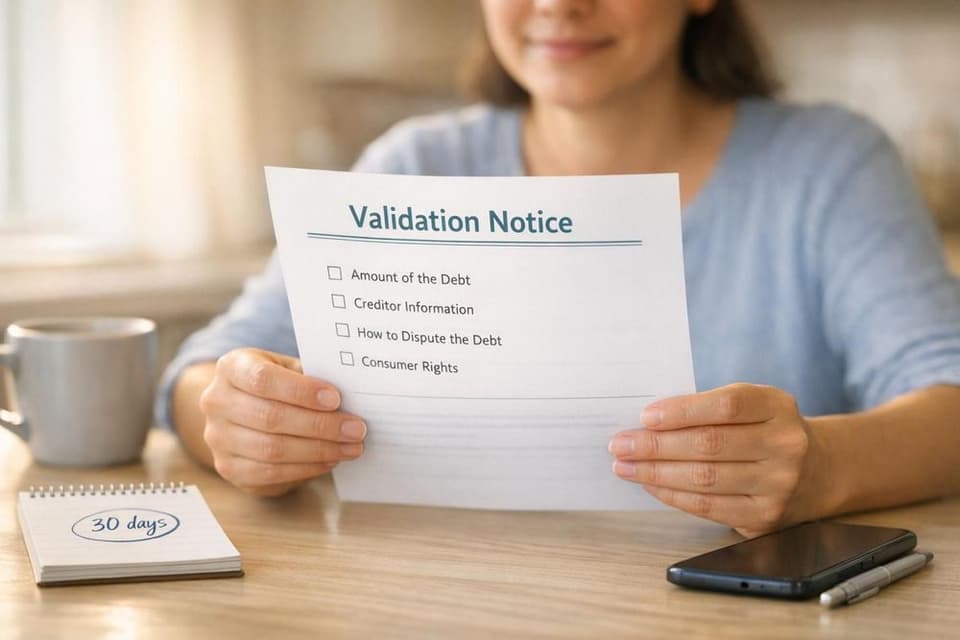
Dealing with debt collection can be stressful, but understanding your rights can make the process easier. Under the Fair Debt Collection Practices Act (FDCPA), you’re protected from abusive, deceptive, or unfair practices by debt collectors. Here’s what you need to know:
- What’s Covered: Personal debts like credit cards, medical bills, student loans, and mortgages.
- Your Key Rights:
- Collectors must provide a validation notice within 5 days of first contact, detailing the debt amount and creditor.
- You have 30 days to dispute the debt in writing, during which collection efforts must pause.
- Collectors can only call between 8:00 a.m. and 9:00 p.m. and must limit call frequency.
- You can request collectors to stop contacting you entirely through a written request.
- Prohibited Practices: Harassment, false claims, misleading threats, or unfair tactics like charging unauthorized fees.
- Penalties for Violations: Collectors may face fines of up to $1,000 per violation, and class actions can result in penalties up to $500,000 or 1% of their net worth.
- How to Report Issues: File complaints with the Consumer Financial Protection Bureau (CFPB), Federal Trade Commission (FTC), or your state Attorney General.
Consumer Rights Under the Fair Debt Collection Practices Act (FDCPA)
Consumer Rights Under the Fair Debt Collection Practices Act (FDCPA)
The Fair Debt Collection Practices Act - Explained
Fair Debt Collection Practices Act
The Fair Debt Collection Practices Act (FDCPA) Explained
The Fair Debt Collection Practices Act (FDCPA) was introduced on September 20, 1977, as a response to reports of abusive and harmful debt collection practices. These practices often had severe consequences for individuals, prompting the need for stricter regulations. Over time, enforcement of the Act has grown stronger, especially after regulatory updates.
A significant shift occurred in 2010 when the Dodd-Frank Act reassigned rulemaking and enforcement authority from the Federal Trade Commission (FTC) to the Consumer Financial Protection Bureau (CFPB). This change brought more rigorous oversight. For example, in 2021, CFPB enforcement actions resulted in over $15 million in consumer redress. Earlier, in 2012, the FTC received 125,136 complaints about third-party debt collectors, highlighting the ongoing necessity for regulation.
These changes have clarified who must adhere to the FDCPA and how the Act applies.
Who the FDCPA Applies To
The FDCPA focuses on third-party debt collectors, including collection agencies, debt buyers, and attorneys collecting debts for others. It covers debts for personal, family, or household purposes, such as credit card balances, medical bills, auto loans, and mortgages.
Original creditors - like banks and retailers - are generally not covered by the FDCPA. However, if an original creditor collects its own debts under a name that suggests a third party is involved, they must follow FDCPA rules. The Act does not apply to business-related debts, government employees acting in their official capacity, or nonprofit consumer credit counseling organizations.
Consumer Protections Under the FDCPA
The FDCPA sets strict guidelines for debt collectors' behavior. For instance, within five days of their first contact, collectors must send a validation notice detailing the debt amount, the creditor's name, and instructions for disputing the debt. Consumers have 30 days to dispute the debt in writing, during which collection efforts must pause until the debt is verified.
The Act also regulates how and when collectors can communicate. Calls are restricted to between 8:00 a.m. and 9:00 p.m. local time, and collectors cannot make more than seven calls within seven consecutive days about a specific debt. If a consumer submits a written request to stop communications, collectors must comply, except to confirm the request or notify the consumer of legal actions. Additionally, if a consumer has legal representation, all communications must be directed to their attorney, as long as the attorney's contact details are provided.
Consumer Rights During Debt Collection
The Fair Debt Collection Practices Act (FDCPA) provides a solid foundation for protecting your rights when dealing with debt collectors. It equips you with tools to verify debts, dispute inaccuracies, and set clear limits on how collectors communicate with you.
How to Request Debt Validation
When a debt collector contacts you, they’re required to send a validation notice either during the initial communication or within five days. This notice should include details like the total amount owed (often with an itemized breakdown of interest and fees), the creditor’s name, your account number, and an explanation of your right to dispute the debt within 30 days.
To request validation, send a formal letter via certified mail with a return receipt. This creates a clear record of your request. In your letter, include your full name, address, the collector’s contact details, and a specific request for documentation that proves the debt is valid. Examples of what you can request include the original creditor’s name and address, an itemized statement of charges, and proof that the collector has the legal authority to collect the debt. Always keep copies of everything you send and receive.
"If the consumer notifies the debt collector in writing within the thirty-day period... that the debt, or any portion thereof, is disputed... the debt collector shall cease collection of the debt... until the debt collector obtains verification of the debt." - 15 U.S.C. § 1692g
Once the collector receives your written dispute, they must halt all collection activities until they provide the requested verification. Many validation notices today include a tear-off form with prompts like "This is not my debt" or "The amount is wrong", making it easier for you to provide the necessary details. These steps ensure you can manage the process while staying protected under FDCPA rules.
How to Dispute a Debt
If you believe a debt is incorrect or doesn’t belong to you, you have the right to dispute it. The 30-day dispute window begins when you receive the validation notice - not from the first contact by the collector.
To dispute the debt, send a letter via certified mail with a return receipt to maintain a clear paper trail. Explain why you’re disputing the debt - whether the amount is wrong, you’ve already paid it, or you don’t recognize the creditor. If the current collector differs from the original creditor, request the original creditor’s name and address for clarity. This can be particularly useful in cases of identity theft or sold debts.
"Verification of a debt involves nothing more than the debt collector confirming in writing that the amount being demanded is what the creditor is claiming is owed; the debt collector is not required to keep detailed files of the alleged debt." - Fourth Circuit Court of Appeals, Chaudhry v. Gallerizzo
Until the collector provides proper verification, they cannot resume collection activities. If the debt has already been reported to a credit bureau, the report must reflect that the debt is under dispute. When submitting supporting documents, such as copies of canceled checks or bank statements, make sure to keep the originals for your records. Using these rights helps ensure fairness and accuracy throughout the process.
When and How Debt Collectors Can Contact You
The FDCPA also outlines strict rules about when and how collectors can reach out to you. Collectors are only allowed to call between 8:00 a.m. and 9:00 p.m. in your local time zone. If they know your employer prohibits personal calls at work, they’re not allowed to contact you there.
If you have legal representation, collectors must communicate with your attorney directly. The FDCPA also restricts call frequency - collectors can’t make more than seven calls within seven consecutive days about the same debt. After having a phone conversation with you about a specific debt, they must wait at least seven days before calling again.
Collectors can use email, text messages, or social media to contact you, but they must offer a simple way for you to opt out of these methods. They are strictly prohibited from publicly posting about your debt on social media. When reaching out to third parties, such as family members or neighbors, they can only do so once to obtain your location information and cannot disclose that you owe a debt.
You also have the right to stop all communication from a collector. To do this, send a written request via certified mail asking them to cease contact. After receiving your request, the collector can only contact you once more to confirm they’ll stop or to inform you of specific legal actions, such as a lawsuit. If a collector calls at a time you find inconvenient, you can ask them to end the call, and under the FDCPA, they must comply. These rules ensure that debt collection practices remain respectful and within the boundaries of the law.
What Debt Collectors Cannot Do
Knowing your rights and what collectors are not allowed to do is crucial for identifying abusive practices and defending yourself. The Fair Debt Collection Practices Act (FDCPA) clearly outlines behaviors that debt collectors are forbidden from engaging in. These restrictions fall into three main areas: harassment, deception, and unfair tactics. Understanding these rules can help you spot when a collector crosses the line and equips you to take action.
Harassment and Abusive Behavior
Debt collectors are strictly prohibited from using harassment or abusive conduct. This includes threatening you, your reputation, or your property. They also cannot use obscene or profane language during any form of communication, whether it’s over the phone, via email, or through text messages.
"A debt collector may not engage in any conduct the natural consequence of which is to harass, oppress, or abuse any person in connection with the collection of a debt." - Fair Debt Collection Practices Act, Section 806
Even if collectors stay within the legal limits for call frequency, repeated calls meant to annoy or harass can violate the FDCPA. Additionally, they are not allowed to publish "shame lists" of individuals who owe money. Anonymous calls or communications where they fail to identify themselves or their purpose are also forbidden.
Deceptive and Misleading Practices
The FDCPA bans the use of false or misleading tactics to collect debts. These practices are designed to intimidate or confuse consumers, and the law explicitly prohibits them.
"A debt collector may not use any false, deceptive, or misleading representation or means in connection with the collection of any debt." - Fair Debt Collection Practices Act, Section 807
For example, collectors cannot falsely claim to be attorneys, government officials, law enforcement officers, or credit bureau employees unless they actually hold those roles. They are also prohibited from misrepresenting the debt amount, its legal status, or suggesting that failing to pay is a criminal offense. Threatening arrest or imprisonment for unpaid debts is strictly against the law - owing money is not a crime.
Collectors are further barred from sending documents that imitate legal or court orders if they are not genuine. They must use their real business name and cannot operate under a fake company name. If a debt is time-barred (meaning it is no longer legally enforceable due to the statute of limitations), collectors cannot threaten to sue you or falsely claim the debt is still valid. Similarly, they cannot suggest that selling your debt to another agency will strip you of any legal defenses.
Unfair Collection Tactics
The FDCPA also prohibits the use of unethical or unfair methods to collect debts.
"A debt collector may not use unfair or unconscionable means to collect or attempt to collect any debt." - 15 USC 1692f
For instance, collectors can only charge fees or interest if your original agreement or state law explicitly allows it. They are not allowed to deposit postdated checks early - if you provide a check dated for the future, they must wait until that date to cash it. Collectors also cannot send postcards because these expose your debt information to anyone handling your mail.
Additionally, collectors are restricted in how they contact third parties. They can only reach out to others to locate you, not to discuss your debt. Even then, they are allowed to contact each third party only once and must not disclose that you owe money. Using any identifying language or symbols on envelopes that hint at debt collection is also prohibited.
Violating these rules can lead to legal repercussions for the collector. Courts can award you up to $1,000 in statutory damages even if you haven’t suffered financial harm. In class action cases, the total recovery is capped at the lesser of $500,000 or 1% of the collector’s net worth. These penalties highlight the importance of adhering to the FDCPA, as outlined further in the next section.
Penalties for FDCPA Violations and How to Report Them
When debt collectors cross the line and violate the FDCPA, they can face serious financial consequences. Knowing these penalties and how to report violations puts you in a stronger position to protect your rights.
Legal Consequences for Collectors
Debt collectors who violate the FDCPA are responsible for covering any actual damages you suffer. This could include things like lost wages if you missed work or medical expenses from stress-related health problems caused by their behavior.
On top of that, collectors can be hit with statutory penalties of up to $1,000 per violation, even if you haven’t suffered measurable financial harm. In cases involving multiple consumers, such as a class action, the total recovery is capped at $500,000 or 1% of the collector’s net worth, whichever is less. Courts may also award attorney’s fees and court costs if your case is successful.
However, timing is everything. You need to file your lawsuit within one year of the violation. Some states have longer deadlines under their own consumer protection laws, so it’s worth reaching out to your state Attorney General to explore all your options.
Understanding these penalties can help you take meaningful action if a collector steps out of line.
How to File a Complaint
If you’ve experienced an FDCPA violation, you have several ways to report it. Knowing where to go and what to do can make the process smoother.
Start with the Consumer Financial Protection Bureau (CFPB). They handle individual complaints and will forward your issue to the company involved. You can file a complaint online through the CFPB’s website or call 1-855-411-2372. Most complaints receive a response within 15 days.
"The CFPB takes consumer complaints, passes those complaints along to the creditor, and then works with the consumer and creditor to find a solution to the problem." - Nolo
Another option is the Federal Trade Commission (FTC). While the FTC doesn’t resolve individual cases, they track complaints to identify patterns of abuse and take broader legal action. You can report violations by calling 1-877-FTC-HELP.
Your state Attorney General is also a valuable resource. They can investigate violations of state consumer protection laws, which sometimes offer stronger protections than federal regulations.
If you prefer to take direct action, you can sue the debt collector in state court or small claims court. Small claims court is a simpler process where you can represent yourself, but the damages you can claim are limited. State court cases allow for higher awards but usually require hiring an attorney.
To strengthen your case, keep a detailed record of all communications. Note dates, times, and specifics of each interaction. Save every letter, email, text, and even envelopes from the collector. When sending letters, like disputes or cease communication requests, use certified mail with return receipt to create a reliable paper trail. These records can be crucial evidence if you need to prove violations occurred. You can even use documented violations as leverage during debt settlement negotiations, as collectors may prefer to settle rather than face legal costs.
Compliant Debt Portfolio Trading on Debexpert
Debexpert
Adhering to the FDCPA (Fair Debt Collection Practices Act) is a cornerstone of ethical and legal debt portfolio trading. Under the FDCPA, anyone purchasing delinquent debts is considered a "debt collector", which brings specific responsibilities and restrictions. Debexpert's platform is designed to support these legal obligations by embedding compliance-focused tools into every step of the trading process.
How Debexpert Ensures Compliance
Debexpert offers a range of features to help users stay compliant throughout transactions. For instance, its secure file sharing system employs end-to-end encryption, allowing sellers to share validation documents safely. Buyers can use the platform's portfolio analytics tools to perform due diligence, ensuring debts being purchased haven't been discharged in bankruptcy, settled, or already paid - actions prohibited under the FDCPA.
The platform also facilitates real-time communication between buyers and sellers, enabling them to confirm details like dispute statuses, statute limitations, and consumer opt-out preferences before finalizing deals. Additionally, Debexpert's system ensures proper record-keeping by maintaining documentation for at least three years after the last collection activity, in line with both the FDCPA and Regulation F requirements.
These built-in tools ensure that all parties involved can follow best practices and meet compliance standards during every phase of the transaction.
Best Practices for Debt Portfolio Transactions
To avoid legal pitfalls, it's essential to follow some key practices when trading debt portfolios:
- Thoroughly review portfolios before listing. Remove any accounts that have been discharged in bankruptcy, settled, or fully paid, as transferring these debts is against the law.
- Provide accurate creditor information. Ensure you can supply the original creditor's name and address for each debt, as this information must be available upon request within 30 days.
- Include itemization tables. Portfolios should have detailed itemized records for each debt to comply with the CFPB's Model Validation Notice requirements.
- Avoid disputed debts. Do not engage in collection activities on debts where consumers have requested verification or disputes remain unresolved.
- Verify legal judgments. Confirm that any judgments were obtained in the correct jurisdiction - either where the consumer signed the contract or where they currently reside.
"A debt collector may not, with certain exceptions, sell, transfer for consideration, or place for collection a debt that it knows or should know has been paid or settled or discharged in bankruptcy." - FDIC Consumer Compliance Examination Manual
Special attention should also be given to time-barred debts, where the statute of limitations has expired. Pursuing or threatening legal action on such debts violates the FDCPA. Sellers should also maintain detailed records of consumer opt-outs for electronic communications, ensuring future collection efforts respect these preferences.
Conclusion
This discussion has highlighted the rights, responsibilities, and compliance measures that shape debt collection practices. Consumer protections, like those outlined in the FDCPA, are in place to guard against harmful practices that can lead to serious consequences such as personal bankruptcies, job loss, or invasions of privacy. For example, consumers have the right to request a written validation notice within five days of initial contact or dispute a debt in writing within 30 days. These measures empower individuals to challenge errors and avoid paying debts they don’t owe.
Compliance with these laws isn’t optional - violations can result in significant penalties. Collectors may face actual damages, fines up to $1,000 per incident, and, in the case of class actions, claims of up to $500,000 or 1% of their net worth. These regulations not only protect consumers but also ensure ethical collectors aren’t disadvantaged by competitors using harassment or deceptive tactics. Key rules, such as the 30-day dispute period and limits on call times, create a fair and predictable debt resolution process.
Platforms like Debexpert play an important role in supporting compliance. By integrating features such as secure file sharing, advanced portfolio analytics, and automated record-keeping that adheres to federal retention requirements, the platform helps buyers and sellers meet legal standards while streamlining transactions. When both parties understand and respect their rights and obligations, debt portfolio trading becomes more transparent, ethical, and efficient.
FAQs
Does the FDCPA apply to the original creditor or only third-party collectors?
The Fair Debt Collection Practices Act (FDCPA) applies exclusively to third-party debt collectors - those who collect debts on behalf of someone else. In contrast, the law does not regulate the actions of original creditors when they are collecting their own debts. This distinction is key to understanding who falls under the FDCPA's rules.
What should I do if the debt is too old or past the statute of limitations?
If the debt has surpassed the statute of limitations, check if it’s considered time-barred. This means creditors or debt collectors are no longer allowed to sue you for repayment. However, proceed carefully - making a payment or even acknowledging the debt might reset the clock on the limitation period. To fully understand your rights, review the laws in your state and consider consulting a professional for guidance.
How can I prove an FDCPA violation and what evidence should I save?
To demonstrate a violation of the FDCPA, it's essential to gather evidence that shows the debt collector's failure to comply with the law. This could include instances of harassment, threats, or misleading statements. Make sure to keep the following:
- Phone call recordings (only if your state allows it legally).
- Written communications, such as letters, emails, or text messages.
- Detailed notes about dates, times, and the specifics of each interaction.
- Evidence of false or deceptive claims made by the collector.
This kind of documentation can be crucial in showing that the collector engaged in practices prohibited by the FDCPA, such as unfair or abusive behavior.
