

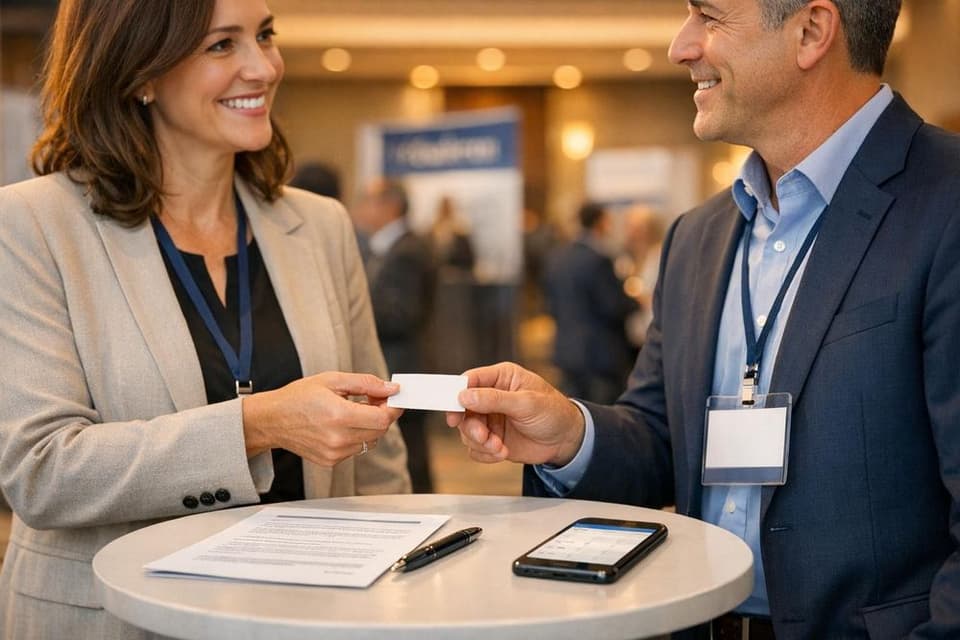
Connecting with debt buyers is all about building trust, and nothing beats face-to-face meetings at industry events. These gatherings are prime opportunities to meet decision-makers, exchange insights, and lay the groundwork for future deals. Whether you're attending large conferences like RMAI or smaller executive summits, the key is preparation, targeted networking, and timely follow-ups.
Key Takeaways:
- Why It Matters: In-person meetings foster trust and open doors to new opportunities that digital tools often miss.
- Event Types: Major conferences (e.g., RMAI), executive summits, and niche gatherings (e.g., NCHER for student loans).
- Preparation Tips: Research attendee lists, create a target contact list, and prepare portfolio materials.
- Networking Strategies: Focus on quality over quantity, use structured formats like round-robin sessions, and make meaningful connections.
- Follow-Up: Timely, personalized follow-ups within 24–48 hours can turn casual conversations into lasting partnerships.
By attending the right events and following a structured approach, you can transform networking efforts into tangible business results.
Complete Guide to Networking with Debt Buyers at Industry Events
Complete Guide to Networking with Debt Buyers at Industry Events
Finding and Choosing the Right Industry Events
How to Research Relevant Events
Start by exploring industry-specific calendars that highlight debt trading events scheduled throughout the year. Platforms like Receivables Info offer detailed calendars featuring major conferences such as RMAI, ACA International, and the Debt Connection Symposium. These resources give you a comprehensive look at the events that might align with your portfolio trading goals.
Pay close attention to events led by industry associations. Conferences hosted by organizations like RMAI, ACA International, and NCBA are among the most prominent gatherings in the field. These events are more than just learning opportunities - they’re where critical deals and connections are made.
Tailor your event selection to your portfolio's focus. For instance, if your primary interest is student loan debt, the NCHER Conference would be a perfect fit. On the other hand, RMAI-led events often include sessions dedicated to auto loans and bankruptcy portfolios. By targeting events that align with your goals, you can connect with the most relevant contacts.
Leverage sourcing platforms to identify who will be attending these events. Tools like Grata, which tracks over 25,000 industry conferences, provide attendee lists before you commit to registration. This ensures you’ll be surrounded by the right debt buyers and industry professionals, making your attendance more strategic.
Once you’ve compiled a list of potential events, the next step is to evaluate their actual value based on attendee demographics and networking opportunities.
Assessing Event Value
Look into the profiles of participants before registering. For example, the RMAI Annual Conference attracts debt buyers, originating creditors, and brokers, making it ideal for business development. Similarly, some events, like Collection and Recovery Solutions (CRS), maintain a high ratio of senior-level decision-makers by restricting non-creditor attendance to exhibitors and sponsors.
Evaluate the networking opportunities offered by these events. High-impact conferences go beyond casual networking and include structured formats. For instance, round-robin sessions - where debt buyers rotate among tables - provide guaranteed face time. The Debt Connection Symposium includes interactive small-group roundtables and "best idea" presentations, fostering meaningful conversations.
Weigh the total cost of attendance against the potential benefits. Registration fees for major conferences like RMAI range between $1,135 and $1,735, while the Debt Connection Symposium costs $1,495. Don’t forget to account for travel, lodging, and time away from work. Compare these expenses with the potential for securing new acquisition targets or closing valuable deals.
Finally, review the educational tracks to ensure they align with your portfolio strategy. Topics such as portfolio valuation, debt-buying fundamentals, and legislative updates are often covered at top-tier events. If the sessions don’t address your needs, it might not be worth the investment.
Preparing Before the Event
Creating a Target List of Debt Buyers
Start by getting the attendee list from event organizers or the event's official app. If that's not an option, tools like Phantombuster or Apify can help you scrape LinkedIn Event pages. Afterward, use platforms like Apollo.io (around $49/month) or LinkedIn Sales Navigator (around $99/month) to enrich the data with job titles, seniority levels, and company details.
Identify 20–50 key contacts that align with your portfolio goals. Review speaker and vendor lists to pinpoint established leaders in the industry. Keep everything organized in a Google Sheet, noting each contact’s priority level (e.g., "must meet" or "say hello"), their contact details, and any pre-scheduled meetings.
For example, when preparing for the HABU conference in August 2023, Katie from Leaders Online identified Nick Sinclair, founder of TOA Global, as a critical contact. She reached out on LinkedIn ahead of time, expressing interest in his thoughts on the talent crisis. This proactive approach led to a coffee meeting during the event.
To boost your visibility, update your LinkedIn profile about two weeks before the event. Change your headline and banner to reflect your attendance (e.g., "Meeting debt buyers at RMAI 2026"). Add similar messaging to your email signature, using custom conference images.
Once your target list is ready, shift your focus to locking in pre-scheduled meetings to ensure face time during the event.
Setting Up Meetings in Advance
After identifying your key contacts, start scheduling meetings well before the event. Reach out via personalized LinkedIn messages or emails about 2–3 weeks ahead. Reference specific industry topics to make your outreach relevant, and use a tool like Calendly to set up quick 15-minute meetings. Confirm these meetings 48 hours before the event, specifying a clear location (e.g., "by the coffee station in the exhibit hall").
National Debt Holdings used this method effectively at the 2021 RMAI Annual Conference. They invited attendees to schedule meetings with team members, including Melissa Raymond (Business Development Specialist) and Ricardo Davila (President of Sales and Acquisitions).
Event apps can also be helpful - filter attendees by company type or job title and message them directly through the app.
Creating Portfolio Materials
Prepare portfolio materials that showcase your debt evaluation process. Include analytics on auction types, pool divisions, and sale timing recommendations. Highlight certifications such as RMAi, ACA's PPMS, or MGMA to reinforce your credibility. As Jeff Johnson, Chief Marketing Officer at Hawes Financial Group, advises:
"Don't just say who you are, prove who you are".
Add testimonials and case studies from both clients and consumers. Consumer testimonials, in particular, can demonstrate collection practices that maintain a positive reputation - a key factor for buyers concerned about post-sale risks. Detail your post-sale process, including handling requests for affidavits or account media, and showcase any unique technology you offer, like secure payment systems, SMS/email engagement tools, or digital signatures. These features can justify premium pricing.
Your portfolio materials are often your first impression, so they need to reflect your expertise and reliability. Tools like Debexpert make it easier to organize your materials by offering secure file sharing with end-to-end encryption and portfolio analytics. Having these materials cloud-ready ensures you can quickly share information when buyers show interest during the event.
Why RMAI Is the Premier Networking Event for the Receivables Industry | Mike Becker | Ep. 262
RMAI
Networking During the Event
Turning your pre-event planning into meaningful in-person connections is essential for transforming contacts into actionable leads.
Working the Exhibit Halls and Networking Areas
With a targeted contact list in hand, your goal now is to make quality connections. Focus on meaningful interactions rather than trying to meet everyone in the room. Prioritize the key contacts you identified earlier, such as high-level debt buyers or bank VPs, who often have limited time but significant decision-making power.
When navigating networking spaces, look for open groups - those with relaxed body language and open stances. These are great opportunities to join conversations, especially in casual settings like coffee lines or registration tables. Steer clear of tightly formed groups where participants face inward, as these are often less approachable.
Ditch the paper business cards and opt for digital alternatives like QR codes. This makes exchanging information seamless and ensures details are automatically stored without manual entry. When introducing yourself, keep it concise and highlight the unique value you bring to the debt buying process.
Once you've determined a contact is worth pursuing, agree on next steps, and exit the conversation politely so both parties can continue networking effectively. As Patrick Lencioni wisely said:
"The majority of meetings should be discussions that lead to decisions".
Adjust your approach depending on whether you're on the exhibit floor or in a more casual setting, ensuring you make the most of every interaction.
Attending Social Events
Arrive early to mixers to connect with organizers and key attendees, and during meals, sit with unfamiliar faces to expand your network. Be approachable - introduce yourself to newcomers and share insights about the event to establish credibility.
For instance, the RMAI Annual Conference includes a "round-robin" format where debt buyers rotate between tables for quick introductions with agencies and attorneys. This structured approach helps break the ice and build connections fast.
Evening events like mixers, golf outings, and hospitality suites offer a more casual environment than formal office meetings. Karin Kovacic, Managing Director at Baker Tilly Capital, advises:
"It's really important to be your authentic self. Approach the event like you would any other time. If late nights aren't your thing, you'll see people in the gym [or at run club] in the morning".
Use these relaxed settings to build relationships before transitioning to business conversations. Networking success often comes down to attitude - it's said to be 90% mindset and only 10% strategy.
Starting and Maintaining Conversations
Once you've made introductions, shift toward more meaningful, value-driven discussions. Skip generic questions like "What do you do?" Instead, use event-related topics - such as commenting on a session - to find common ground. The GAINS framework (Goals, Accomplishments, Interests, Networks, and Skills) can guide your follow-up questions.
Be a listener first. Ask thoughtful questions to uncover the buyer's challenges and industry insights. As Dale Carnegie famously said:
"The best way to be interesting is to be interested".
When discussing your portfolio, tell a story rather than just presenting facts. Use the "5 Cs of Credit" to frame your value: Character (borrower reputation), Capacity (repayment ability), Capital (financial strength), Collateral (secured assets), and Conditions (external factors). If your points don't immediately resonate, rethink how you're presenting them.
Finally, take detailed notes right after your conversations. Document specifics like the contact's needs, personal details, or any agreed follow-ups. This will help you send tailored follow-up messages within 24–48 hours while the interaction is still fresh.
Following Up After the Event
The event itself is just the beginning - what truly matters is what happens afterward. Kolin Simon, Founder & CEO of Pursue Networking, nailed it when he said:
"The event wasn't the opportunity. The follow-up was."
The deals you’re chasing often depend on how well you handle the follow-up.
Sending Timely and Personal Follow-Up Messages
Timing is everything. Aim to follow up within 24 to 48 hours after the event. Waiting longer - especially past 72 hours - can cut your response rates in half. To stay efficient, have templates ready, but make sure to personalize them. Take 15 minutes post-event to organize your thoughts and tailor your messages.
Categorize your leads for better focus:
- Hot Leads: People who asked for specific information or meetings.
- Warm Leads: Those you had meaningful conversations with.
- Cold Leads: Brief interactions that may require nurturing.
Avoid generic "nice to meet you" messages. Instead, reference something specific from your conversation, like a shared interest or a mutual connection. Better yet, add immediate value by including a link to a relevant resource or your portfolio summary.
Use multiple channels to maximize your reach:
- Start with an email within 24 hours.
- Follow up with a personalized LinkedIn connection request.
- Send a polite reminder message if needed.
Event-specific follow-ups often perform five times better than cold outreach, so don’t miss this chance.
| Follow-Up Stage | Timing | Channel | Content Focus |
|---|---|---|---|
| Initial Bridge | Within 24 Hours | Gratitude, a specific memory hook, and any promised resources. | |
| LinkedIn Connection | Day 2-3 | Personalized request referencing the event and your chat. | |
| Interest Gauge | Day 4-6 | SMS/WhatsApp/Call | Reference previous email and suggest a time for a call. |
| Value Add | 1-2 Weeks Later | Email/LinkedIn | Share an industry article or timely, helpful content. |
| Nurture | Monthly | Newsletter/Social | Ongoing updates and invites to future events. |
These steps help establish a foundation for deeper engagement.
Maintaining Regular Contact
Once the initial follow-up is done, shift gears to long-term relationship building. Instead of focusing on sales pitches, aim to provide consistent value. A simple 3-Touch Engagement Loop works well:
- Send a value-first message within 24 to 48 hours.
- Share a helpful resource one to two weeks later.
- Offer a nudge or invite to new content after a month.
This system can dramatically improve your results. While most professionals convert less than 10% of their event contacts into lasting relationships, top networkers achieve rates of 30–40%.
You don’t need to reinvent the wheel - search your company’s blog or resource center for materials that address your contact’s challenges. Share these as timely solutions. Hosting small group dinners with eight to ten contacts is another great way to build rapport in a low-pressure setting.
As networking expert Susan RoAne puts it:
"If we are a commodity or a service, we are missing the connection. The only thing that builds connections is conversation - whether online or face-to-face."
Using Event Connections for Future Deals
The connections you nurture today could lead to deals months - or even years - down the line. Patience is essential. In today’s professional landscape, closing a deal often requires 14 to 16 touchpoints, up from 9 to 12 in the past. To move things forward, consider proposing a site visit or working lunch shortly after the event.
Attending industry events regularly also helps build your reputation for reliability and stability, which makes prospects more comfortable with larger transactions. Plus, those new connections can become valuable referral sources, opening doors to additional opportunities.
Jeff Johnson, Chief Marketing Officer at Hawes Financial Group, sums it up well:
"Being credible and being present go a long way. You don't always get a thousand leads, but you get that 'moment in the elevator' that could never have happened anywhere else."
To stay organized, take 15 to 30 minutes within 24 hours of the event to log business cards into your CRM. Jot down notes about each contact’s interests or needs. Mentioning certifications like RMAI's Certified Receivables Business during follow-ups can also reinforce your credibility and build trust for future deals.
A solid follow-up strategy is what turns casual event conversations into lasting business partnerships.
Conclusion
Networking at industry events goes beyond exchanging business cards - it's about building relationships that lead to real opportunities. In fact, about 95% of professionals consider face-to-face networking essential for long-term success. These events can contribute anywhere from 5% to 20% of a company's new client acquisitions, making them a key element in any debt trading strategy.
Success starts with thoughtful preparation and meaningful interactions. Take a systematic approach: research who will be attending, focus on quality over quantity in your conversations, and position yourself as someone who adds value. As Ivan Misner, Founder of BNI, wisely puts it:
"A good networker has two ears and one mouth, and uses them both proportionately."
One thing that often separates successful networkers from the rest is follow-up. While 62% of businesses fail to reach out after an event, personalized follow-up can set you apart. The connections you make today might lead to deals months - or even years - down the road, but only if you nurture them. This is where the pre-event preparation and in-event strategies discussed earlier come full circle.
Adam Parks from Receivables Info captures the essence of networking perfectly:
"Relationships are built on a shared experience, being together amplifies that experience."
Take these strategies to your next event: focus on authentic connections, honor your commitments, and keep in touch to turn conversations into long-term partnerships.
FAQs
Which event should I attend first?
The 2026 Annual Conference by the Receivables Management Association International (RMAI) is set to take place from February 9-12, 2026, in Las Vegas. This event stands out as a must-attend for debt buyers and other professionals in the receivables management industry. It offers top-tier networking opportunities and a chance to connect with key players early in the year.
For context, the 2025 RMAI Annual Conference, held from February 10-13, 2025, was a highly attended event. However, the 2026 conference promises to be an even better opportunity to gain fresh insights and build valuable connections.
How do I pitch a portfolio in 30 seconds?
To effectively pitch a portfolio in just 30 seconds, you need a sharp, focused approach. Begin by stating your role and the portfolio’s main focus - this sets the stage. Next, spotlight key metrics that demonstrate its strength, such as total debt amount, average yield, or recent accomplishments. For instance, you might highlight performance that outpaces market trends or a specific competitive edge. Always align your pitch with what matters most to your audience to leave a lasting, impactful impression.
What should I do if a buyer goes quiet?
If a buyer goes quiet during an industry event, it’s important to follow up within 24–48 hours to keep the dialogue relevant. Make your message personal by mentioning specific topics or interests you discussed. If they still don’t respond, consider switching up your approach - try reaching out via phone or social media instead of sticking to email. Persistent yet respectful follow-up not only keeps the connection alive but also highlights your professionalism and determination - traits that resonate well in the debt trading world.
