

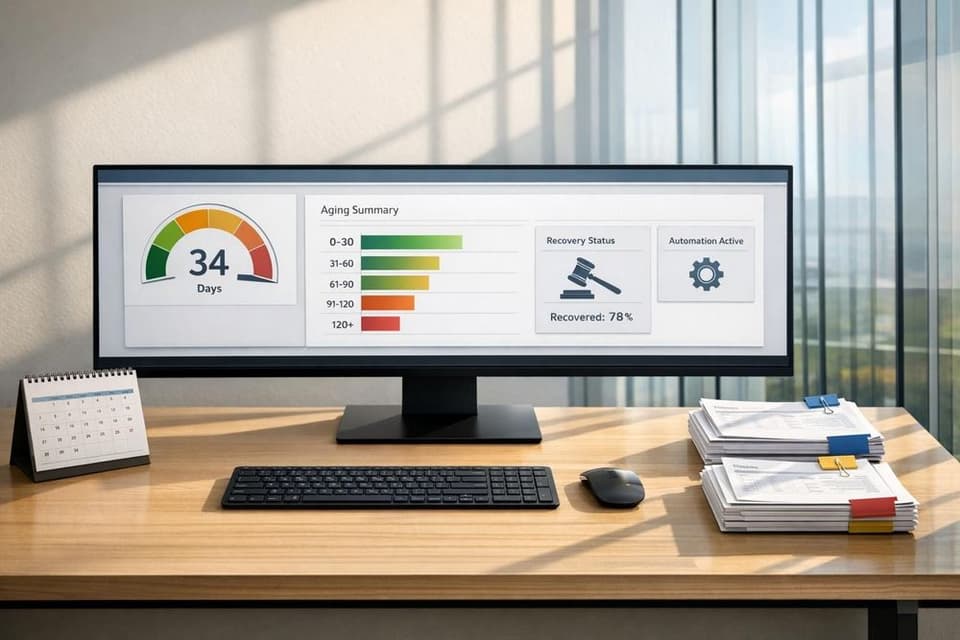
Unpaid invoices can stall your business's growth, disrupt cash flow, and create financial risks. To tackle this, effective accounts receivable (AR) management focuses on reducing payment delays, minimizing bad debt, and maintaining strong customer relationships. Here’s what you need to know:
- Key Metrics: Track Days Sales Outstanding (DSO), accounts receivable turnover ratio, and aging reports to identify delays and prioritize collections.
- Best Practices: Set clear credit policies, improve invoicing accuracy, and automate AR processes to speed up payments and reduce errors.
- Debt Collection: Use structured follow-ups, offer payment incentives, and escalate overdue accounts to specialists when necessary.
- Tools: Platforms like Debexpert streamline debt recovery through auctions, helping businesses recover cash faster.
- Customer Relations: Respectful communication and flexible payment options can strengthen relationships while resolving overdue payments.
How to Collect Your Accounts Receivable - 10 Business Debt Collection Strategies that Work
Key Metrics for Tracking Accounts Receivable Performance
Key Accounts Receivable Metrics and Benchmarks for Better Cash Flow
Key Accounts Receivable Metrics and Benchmarks for Better Cash Flow
Managing accounts receivable (AR) effectively starts with tracking the right metrics. These metrics help shift AR management from being reactive to proactive. Instead of scrambling to figure out why cash flow is tight, you can identify where delays are happening and which customers need extra attention. By focusing on three key metrics, you can refine your collection strategies and improve cash flow.
Days Sales Outstanding (DSO)
DSO measures how long it takes to collect payment after making a credit sale. To calculate it, divide accounts receivable by total credit sales, then multiply by the number of days in the period. For context, the average DSO across industries in Q3 2022 was 37.30 days, with anything under 45 days generally considered healthy. However, industry norms matter - a construction company might naturally have longer collection cycles than a software firm. What’s more important than a single number is tracking trends over time. As Emagia Staff explains:
A rising trend in your DSO should always be a cause for concern and a signal to investigate your collections process.
DSO directly affects your liquidity. A low DSO means you’re turning sales into cash quickly, freeing up funds for reinvestment. On the other hand, a high DSO ties up working capital, often forcing businesses to rely on credit lines for operating expenses. To lower your DSO, consider automating invoicing to prevent delays, tightening credit policies with thorough customer credit checks, or offering early payment discounts - like 2% off for payments made within 10 days.
Accounts Receivable Turnover Ratio
This metric shows how many times you convert your average receivables into cash over a specific period, typically a year. It’s calculated by dividing net credit sales by average accounts receivable. For instance, if your annual credit sales are $1.2M and your average receivables balance is $150K, your turnover ratio would be 8. Generally, a ratio between 7 and 8 is considered healthy.
A high turnover ratio indicates efficient collections and a reliable customer base that pays on time. A low ratio, however, might signal overly lenient credit terms or challenges in collecting from certain customers. You can also convert the turnover ratio into a collection period by dividing 365 by the ratio. Using the earlier example, a ratio of 8 translates to about 45 days. If the ratio starts to drop, it could mean credit terms are being extended to drive sales, or customers are struggling financially. On the flip side, an excessively high ratio might suggest you’re turning away customers who need more flexible terms. Striking the right balance is key.
Aging Report Analysis
While DSO and turnover ratios provide an overview, an aging report gives a detailed look at overdue invoices and specific customer accounts. Receivables are categorized into buckets like Current, 1–30, 31–60, 61–90, and Over 90 days. Kristina Russo from NetSuite offers a sharp reminder:
Unlike a fine wine, the quality of a receivable declines - significantly - as it ages.
A healthy AR portfolio usually has 80% to 90% of invoices in the “current” category. But this can vary by industry. For example, in Q1 2022, 31% of general contractors’ receivables were over 90 days old, compared to just 1% for travel agents. Aging reports help prioritize collection efforts - start with high-value accounts in the oldest categories.
Use aging categories to guide your actions. For current accounts, set up automated reminders. For invoices 31–60 days overdue, follow up with personal calls. Accounts over 90 days may require escalation to collection specialists or even legal action. Regularly reviewing aging reports can also highlight patterns, helping you adjust credit terms or require upfront payments for certain customers.
Best Practices for Managing Accounts Receivable
Managing accounts receivable (AR) effectively goes beyond just following up on overdue payments. It’s about building systems that encourage timely payments right from the start, ensuring smoother cash flow and fewer delays.
Setting Clear Credit Policies
A well-defined credit policy removes uncertainty and minimizes risk. Begin with a standardized credit application to gather critical business and financial details from new customers. This information allows for an objective risk assessment, which might include analyzing financial ratios, reviewing credit reports from sources like Dun & Bradstreet, and considering industry-specific trends.
From there, assign credit limits and terms based on the customer’s risk profile. For instance, a low-risk customer might qualify for Net 60 terms with a $50,000 limit, while a high-risk account could be restricted to $10,000 with Net 30 terms or require an upfront deposit. To streamline decision-making, implement tiered approval levels - routine decisions can be handled quickly, while high-risk accounts require senior management review.
Keep credit policies dynamic by revisiting them during specific trigger events, such as payment delays or changes in a customer’s financial health. Businesses that monitor payment patterns report 37% less revenue loss from bad debt. As Emagia Staff notes:
A credit and collections policy is a formal, written document that outlines a company's guidelines and procedures for extending credit to customers and for collecting payments on outstanding invoices.
Segmenting customers based on payment behavior - such as on-time payers, occasional late payers, and chronic delinquents - can help you tailor communication and credit terms to each group.
Improving Invoicing Procedures
Even with strong credit policies, ineffective invoicing can disrupt collections. In fact, 68% of companies cite late payments as a major cash flow challenge, often caused by preventable invoicing issues.
Send invoices as soon as goods or services are delivered. Use a standardized template that includes key details: a unique invoice number, itemized charges with clear descriptions, due dates, accepted payment methods, and any late fees or early payment discounts.
Accuracy is critical - regularly audit customer records to ensure billing addresses, contact names, and email details are up to date. Incorrect information is a leading cause of payment delays. Since 83% of buyers prioritize a smooth payment experience, any errors or confusion in your invoices could hurt both your cash flow and client relationships.
Switch from paper invoices to digital formats like email, customer portals, or Electronic Data Interchange (EDI). Digital delivery is faster and reduces the risk of human error. For extended projects, consider milestone billing to spread out payments and reduce the risk of a single large unpaid invoice.
Automating AR Processes
Automation can transform your AR operations by saving time and cutting costs, while also increasing collection rates by 1–3%.
Start with automated payment reminders - these “dunning” sequences can send notifications at key intervals, such as 7 days before the due date, on the due date, and at 15, 30, and 60 days past due. Automation ensures consistent follow-ups and maintains a professional tone. Since 65% of emails are often ignored, use multiple channels like SMS and phone calls to boost visibility.
Self-service portals can further enhance the customer experience, allowing clients to view invoices, access payment details, and make payments anytime. This convenience matters - 90% of customers say a complicated payment process negatively affects their loyalty to a supplier.
Modern AR software also incorporates AI tools to match incoming payments with outstanding invoices, speeding up reconciliation. These systems can score accounts based on risk and payment history, helping your team focus on high-risk or large-balance accounts. Automated AR systems not only improve efficiency but also maintain positive customer relationships. Plus, invoice automation often pays for itself within 6 to 18 months, and businesses that actively track failed payments recover 43% more from those accounts.
Debt Collection Strategies That Work
With optimized invoicing and automated accounts receivable (AR) in place, an effective debt collection plan becomes crucial for ensuring timely cash recovery. Considering that 55% to 57% of B2B invoices are paid late, and payments typically arrive 20 days past their due date, having a structured approach is no longer optional - it's essential.
Regular Monitoring and Follow-ups
Keeping a close eye on your aging reports every week is a must. These reports break down accounts by how overdue they are - 30, 60, or 90+ days - helping you zero in on the accounts that need immediate attention. If more than 5% of your receivables are over 90 days overdue, it's a sign that urgent action is required.
Start collections early - send reminders 7–14 days before invoices are due to minimize oversight. Just this small adjustment can trim your average collection time by 10 to 15 days. For overdue invoices, automated multi-channel outreach - using emails, SMS, and phone calls - can help maintain communication and increase engagement.
Tailoring your follow-ups based on customer risk levels also makes a big difference. High-risk accounts need firmer messaging and shorter deadlines, while dependable clients respond better to collaborative, solution-focused communication. Businesses that actively track failed payments recover 43% more revenue and lose 37% less to bad debt. Since chances of recovery drop sharply after 30 days, accounts reaching the 90-day mark should be escalated to professional collectors or legal experts without delay.
Using Incentives and Penalties
Striking the right balance between rewards and penalties can encourage prompt payments without straining customer relationships. Early payment discounts - like 2% off for payments made within 10 days (2/10 net 30) - can provide a positive nudge. For consistently punctual clients, offering perks like loyalty rewards or priority service reinforces good habits.
On the flip side, late payment fees and interest charges can discourage delays, but they need to be clearly outlined in your contracts and invoices upfront. As NowCorp explains:
"If your penalty isn't significant enough, clients will pay late and absorb the small fee. If it's too strict, you risk upsetting customers. Find the balance."
For customers experiencing real financial difficulties, installment or partial-payment plans can be a lifeline. With 82% of small businesses failing due to poor cash flow management, showing flexibility could mean recovering some payment rather than losing the client entirely. Combining these strategies with quick dispute resolution further safeguards your cash flow and minimizes bad debt risks.
Resolving Disputes Quickly
Disputes are a leading cause of payment delays, with 55% of AR professionals citing dispute management as their biggest challenge. Additionally, 31% of businesses admit to delaying payments to their suppliers because of unresolved customer disputes. Addressing disputes promptly not only speeds up collections but also strengthens the overall efficiency of your AR processes.
When a dispute arises, pause automated reminders for the affected amount. Before escalating overdue accounts, confirm that the customer received the invoice - 50% of non-payment cases stem from invoices that were never delivered.
Using a digital dispute log can streamline the process by routing cases to the right teams immediately. A centralized audit trail ensures everyone works with the same information, avoiding confusion.
Start follow-ups by asking if the customer has encountered any product or service issues. Internally, set deadlines for resolving disputes and use dashboards to monitor trends and recurring problems.
As Billtrust puts it:
"The real win lies in preventing issues before they arise - and that requires comprehensive end-to-end visibility."
Using Debexpert for Bad Debt Recovery
Debexpert
Digital platforms like Debexpert are changing the game when it comes to bad debt recovery. Traditional collection methods often take months, delaying cash flow, but Debexpert offers a faster, more efficient alternative. This debt trading platform provides an immediate solution compared to conventional contingency-based approaches.
By July 2021, Debexpert had already facilitated 10 auctions in the U.S., handling $60 million worth of debt. Sellers using the platform typically recover 10 to 12 cents on the dollar, whereas traditional methods average a liquidation rate of 15% to 18% but take significantly longer. As Oleg Zankov, Product Director and Co-founder of Debexpert, puts it:
"Selling and buying delinquent debt is quite a complicated process. We make it easier and clearer."
Here’s how Debexpert simplifies and accelerates the debt recovery process.
Listing Debt Portfolios and Setting Up Auctions
Debexpert provides three auction formats to help sellers maximize their recovery:
- English auctions: Standard ascending bids where participants compete until the timer runs out, setting the final price.
- Dutch auctions: Start with a high price that decreases at fixed intervals until a buyer accepts, ensuring quicker sales.
- Sealed-bid auctions: Buyers submit hidden bids simultaneously, ideal for confidential or high-value transactions.
Sellers can break down large portfolios into smaller pools, ranging from $6,000 to over $300,000, making the platform accessible to smaller investors and speeding up cash recovery. To protect sensitive data, Debexpert uses masked files - anonymized spreadsheets with essential debtor information like client IDs, credit agreements, and debt amounts - enabling buyers to perform due diligence securely. Joining the platform is free for both buyers and sellers, with a commission of 1% to 5% charged upon a successful sale.
Portfolio Analytics and Buyer Communication
Debexpert equips sellers with real-time analytics to monitor bidding activity, file downloads, and buyer engagement. Its mobile app - the first in the debt trading industry - lets sellers track auctions and connect with buyers anywhere. Secure communication tools, such as real-time chat with stored conversation history and encrypted file sharing, further enhance the platform’s usability. Daniel Bloomgarden, an Account Manager at Debexpert, highlights:
"By centralizing this marketplace, the market actors will determine and set a fair market price."
Sellers can also use a participant mode to share information instantly with buyers and select winning bids on the spot. The platform simplifies transactions with standardized Purchase and Sale Agreements (PSA) that comply with the Fair Debt Collection Practices Act.
Debexpert Plan Comparison
| Plan Name | Price | Key Features | Best For |
|---|---|---|---|
| Basic Access | Free | View masked files, browse portfolio details | Exploring the platform before committing |
| Seller Plan | Custom | Portfolio analytics, auction setup, presale marketing, secure file sharing, mobile app access | Businesses selling uncollected debt portfolios |
| Buyer Plan | Custom | Real-time bidding, portfolio evaluation tools, secure communication, notifications for preferred debt types | Investors and agencies purchasing debt |
Both the Seller and Buyer plans require compliance verification to ensure all transactions meet legal standards. Since its launch in 2019, Debexpert has gained a 70% market share in Russia and expanded to the U.S. and four other countries, thanks to its focus on simplifying the debt trading process.
Maintaining Good Client Relationships During Collections
Strong client relationships are the backbone of any successful business, even during debt collection. Contrary to popular belief, collecting overdue payments doesn’t have to harm your relationships. In fact, 73% of businesses report better client relationships after adopting automated accounts receivable processes. The secret lies in approaching collections as a partnership, not a confrontation.
Clear and Respectful Communication
Every collection call should start with a collaborative tone. Instead of demanding payment outright, try asking, "Is there anything preventing payment on our end?" This question not only helps uncover potential issues but also encourages cooperation through the reciprocity principle. Active listening is key - give clients the chance to explain their situation, and confirm details like missing invoices or internal delays.
Timing your outreach can also make a big difference. Aim for calls on Tuesday through Thursday mornings, steering clear of hectic Mondays and slower Friday afternoons. Before ending a call, secure a verbal commitment to a specific payment date. Research shows that people are more likely to follow through on commitments they say out loud. A UK Department for Business & Trade study even found:
chasing payments can actually enhance customer relationships rather than strain them
when done with professionalism.
For overdue accounts, use a graduated reminder system. Start with automated email reminders for accounts 1–7 days past due, escalate to direct emails or SMS for 8–14 days overdue, and move to phone calls for payments 15–30 days overdue. This step-by-step approach not only improves recovery rates but also keeps the tone professional and constructive. Additionally, empathetic negotiation - like acknowledging challenges such as supply chain issues - can foster goodwill and increase recovery rates by 6%. This balance of empathy and action helps maintain trust while addressing payment delays.
Offering Flexible Terms for Reliable Payers
For clients with a history of timely payments who are facing temporary cash flow problems, flexibility can go a long way in preserving the relationship. Offering structured repayment plans - whether weekly, biweekly, or monthly - can make payments more manageable. Early payment incentives, like discounts or waived late fees, can also motivate timely settlements, especially when paired with cost-efficient payment methods like ACH.
Here’s an example: In February 2025, a regional service provider reduced its Days Sales Outstanding from 45 to 12 days within just 90 days. They achieved this by using AI-driven collections, improving cash flow by $2.1 million, and maintaining a 98% customer satisfaction rate. Flexible payment options and automated communication were key to this success. Brandon Davis, CEO of Interval AI, explained:
The integration of AI in collections isn't just about automation; it's about creating smarter, more effective recovery strategies while maintaining positive customer relationships & reducing costs
.
When offering flexible terms, document everything - total debt, payment schedules, and consequences for missed payments. To ensure the plan is realistic, request supporting documents like sales forecasts or cash flow projections. If a payment is missed, follow up quickly to understand the issue and decide whether further escalation is necessary. This approach not only secures payments but also builds trust for future transactions.
Automating Payment Reconciliation
Manual reconciliation can slow down cash recovery and frustrate clients. Automated systems, on the other hand, use real-time data to minimize errors and disputes. Jana Rzezniczek from Invoiced highlights this advantage:
The more you rely on manual effort from your staff, the more human error can occur, disrupting and delaying core accounts receivable (A/R) tasks and potentially frustrating customers
.
For instance, in 2025, Multi Service Fuel Card introduced automated debt collection workflows and recovered an additional $650,000 in just seven months. By implementing a self-service portal and automated reconciliation, they nearly doubled debit card payments to 40% of total transactions. They also reduced the likelihood of accounts becoming severely delinquent (60+ days overdue) by 21%. Offering client portals with real-time balances, payment histories, and receipt downloads simplifies the process for everyone involved. Automation not only improves cash flow but also enhances the client experience, making it easier for businesses and their customers to stay on track.
Conclusion
Managing accounts receivable is about more than just collecting overdue payments - it's about turning unpaid invoices into steady cash flow while maintaining strong client relationships. With 55% of B2B invoices being paid late and an average delay of 20 days, businesses often face cash flow challenges that can disrupt operations and limit growth.
The key lies in balancing efficiency with respect, a recurring theme in effective AR management. Start with proactive, data-driven strategies. For instance, aging reports can help identify warning signs, such as when over 5% of total receivables are overdue by 90+ days. Addressing these high-risk accounts early increases the chances of recovery. Automated AR platforms can also make a big difference, speeding up payments by 34%, reducing operational costs by 40%, and doubling recovery rates. Businesses adopting modern AR tools report a 37% drop in bad debt write-offs and a 46% boost in collection speeds.
When internal efforts fall short, services like Debexpert provide a streamlined way to recover debts. By listing portfolios, setting up auctions, and using analytics, businesses can turn uncollectible invoices into immediate cash.
Combining advanced AR tools with thoughtful customer engagement not only improves cash flow but also strengthens business relationships. As Jeremy Crane puts it:
The future of collections is not just about recovering money, but about doing it in a way that sustains long-term business relationships.
A respectful and professional approach - bolstered by automation, flexible payment plans, and clear communication - can actually build trust rather than erode it. It's worth noting that 83% of buyers prioritize a smooth payment process when choosing suppliers. By focusing on both operational efficiency and empathetic engagement, businesses can secure their financial health while fostering lasting partnerships.
FAQs
What’s a good DSO target for my industry?
A good DSO (Days Sales Outstanding) target can vary depending on your industry. However, as a general rule, keeping it under 45 days is a smart goal. Staying within this range helps businesses maintain healthy cash flow, minimize the risk of bad debt, and keep operations running smoothly.
When should I escalate an overdue invoice to a collector?
If an invoice remains unpaid for an extended period - usually about 30 days past the due date - it may be time to escalate it to a collector. The exact timing can vary depending on your company's policies and the situation with the account. Before taking this step, ensure you've made reasonable efforts to collect the payment yourself. This approach helps preserve positive client relationships while addressing the overdue balance.
Is selling delinquent debt on Debexpert worth it?
Selling delinquent debt on Debexpert offers a practical way to recover outstanding amounts more efficiently. It’s particularly useful when internal collection efforts have hit a dead end. By leveraging this method, businesses can improve cash flow and simplify the recovery process for unpaid debts.
