

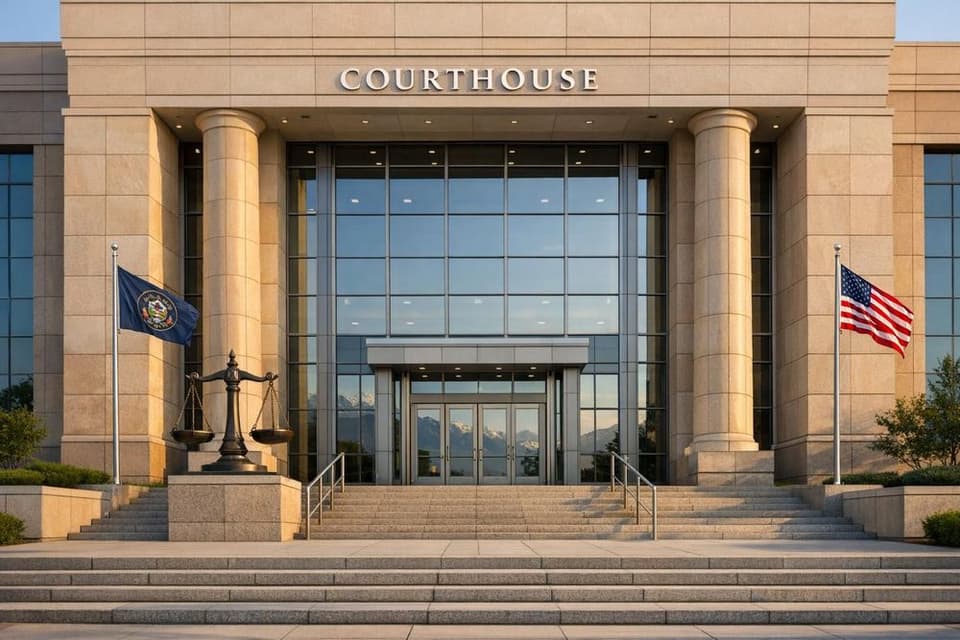
Utah's debt collection laws have undergone major updates recently, simplifying requirements for collection agencies and shifting the focus to federal regulations like the FDCPA. Key points include:
- State Licensing Changes: As of May 3, 2023, Utah no longer requires a "Collection Agency" license or a $10,000 surety bond. Agencies must still register their business structure with the state.
- Statutes of Limitations: Deadlines vary by debt type - 6 years for written contracts, 4 years for oral contracts, and 8 years for judgments (renewable once).
- Federal Protections: The FDCPA prohibits harassment, false claims, and abusive practices. Violations can result in damages up to $1,000.
- Exemptions: Utah protects essentials like primary home equity (up to $53,700 per person), certain personal property, and public benefits from seizure.
For creditors, understanding these rules is critical to avoid penalties and ensure lawful debt recovery. Debtors should also be aware of their rights and protections under state and federal law.
Utah Debt Collection Laws
State Laws and Regulations
In May 2023, Utah introduced significant changes to its debt collection regulations with the passage of House Bill 20. This legislation repealed nine existing statutes that previously governed collection agencies. Among the changes, the bill eliminated both the registration requirement and the $10,000 surety bond. Representative Cory Maloy explained that these updates were aimed at removing redundant regulations.
Currently, Utah Code Ann. § 12-1-11 serves as the main statute regulating debt collection. It sets clear boundaries on fees, including collection and convenience fees, that creditors or third-party agencies can charge. Additional consumer protections are outlined in Utah Code §§ 70C-7-105 and 70C-7-106. These provisions make credit agreements involving threats of violence unenforceable and allow courts to refuse enforcement of agreements deemed unconscionable. Courts can impose penalties ranging from $100 to $5,000 for such agreements.
The legislation also removed criminal penalties for administrative non-compliance. While this reduces liability for technical filing errors, businesses must still register as a basic entity with the state.
These reforms have simplified licensing requirements, which are detailed in the next section.
Licensing Requirements for Collectors
As of May 3, 2023, Utah no longer requires a specialized "Collection Agency" license. The Division of Corporations and Commercial Code clarified:
This bill [H.B. 20] went into effect on May 3, 2023, and the Division of Corporations and Commercial Code will no longer require a Collection Agency operating in the state of Utah to apply for the Collection Agency registration or to submit the associated bond.
Agencies must still register their business structure - whether as an LLC, Corporation, or DBA - with the Division of Corporations and Commercial Code. The division also advises agencies to consult legal and tax professionals to ensure compliance with any remaining obligations following the repeal of Title 12. Additionally, businesses must confirm their "Good Standing" status with the Utah Tax Commission.
The Division of Consumer Protection continues to enforce other relevant statutes, including the Consumer Sales Practices Act and the Uniform Debt-Management Services Act.
With these changes, federal laws, particularly the FDCPA, now take center stage in regulating third-party collectors in Utah.
Federal Laws in Utah
Following the repeal of state-specific licensing requirements, the Fair Debt Collection Practices Act (FDCPA) has become the primary regulatory framework for third-party debt collectors in Utah. The FDCPA applies to collection agencies and third-party collectors but not to original creditors such as banks or healthcare providers. According to 15 U.S.C. § 1692, Congress highlighted that abusive collection practices could lead to issues like personal bankruptcies, marital problems, job losses, and privacy invasions.
The FDCPA establishes strict rules for collectors, including limits on contact times. Collectors cannot reach out to consumers before 8:00 a.m. or after 9:00 p.m. local time. If a consumer has legal representation, collectors must cease direct communication. Harassment, such as using obscene language, making threats, or placing repeated calls to annoy, is strictly prohibited. Additionally, collectors cannot make false claims, such as pretending to be affiliated with the government or threatening arrest for non-payment.
Collectors are required to send written validation of a debt within five days of the initial contact. This notice must include the debt amount and the creditor's name. If a consumer disputes the debt in writing within 30 days, collection activities must pause until the debt is verified. Violations of the FDCPA can lead to actual damages, statutory damages of up to $1,000, and class action penalties capped at either $500,000 or 1% of the collector's net worth.
Best & Worst States for Debt Collection Laws
Statutes of Limitations in Utah
Utah Debt Collection Statutes of Limitations by Debt Type
Utah Debt Collection Statutes of Limitations by Debt Type
Time Limits by Debt Type
Utah law establishes specific deadlines for creditors to file lawsuits, depending on the type of debt involved. For written contracts - such as credit card agreements, medical debts with signed documentation, and promissory notes - the statute of limitations is 6 years, as outlined in Utah Code § 78B-2-309.
Debts based on oral contracts have a shorter time frame, with a 4-year limit under Utah Code § 78B-2-307. Similarly, open store accounts, which include charges for goods, labor, or services, also fall under a 4-year limitation period, often cited under § 78B-2-310. Credit card debt generally follows the 6-year rule, though if pursued as an "account stated" claim, it is subject to the 4-year limit.
Judgments have the longest collection period, with an 8-year statute of limitations, and creditors can renew them for an additional 8 years. For short sale deficiencies, creditors must act quickly, as they have only 3 months to file after the sale. Meanwhile, criminal fines are not subject to any statute of limitations, allowing the state to pursue collections indefinitely.
| Debt Type | Statute of Limitations | Utah Code |
|---|---|---|
| Written Contracts (Credit Cards, Medical) | 6 Years | § 78B-2-309 |
| Oral Contracts | 4 Years | § 78B-2-307 |
| Open Store Accounts | 4 Years | § 78B-2-310 |
| Judgments (Renewable) | 8 Years | § 78B-2-311 |
| Short Sale Deficiency | 3 Months | N/A |
Understanding these time limits is crucial for creditors before initiating legal action in Utah.
Consequences of Expired Time Limits
When the statute of limitations runs out, creditors lose the legal right to sue for the debt, but the debt itself doesn't vanish. Collections efforts - like phone calls, letters, or emails - can continue, provided no threats of legal action are made. Under the FDCPA, third-party collectors are prohibited from suing or even threatening lawsuits on time-barred debts, though original creditors in Utah may still attempt to collect.
The statute of limitations functions as an affirmative defense, meaning debtors must actively raise it in their court response. If they fail to do so, they waive this protection. As explained by Utah Justice:
The statute of limitations is an affirmative defense. That means you must raise the issue properly in the debt collection lawsuit or you waive the defense. The court will not raise the defense for you
. This means that even if a debt is decades old, neglecting to respond appropriately could result in a valid judgment.
It's also important to note that certain actions can reset the clock on the statute of limitations. For example, making a partial payment or providing a written acknowledgment of the debt restarts the time period. Additionally, if the debtor leaves Utah for a significant period, the limitations period may be paused.
This legal framework plays a central role in shaping how creditors and debtors navigate debt recovery in Utah.
Debt Collection Through Utah Courts
Utah's court process for debt collection is designed to comply with the state's laws and the Fair Debt Collection Practices Act (FDCPA), ensuring all enforcement actions are conducted lawfully.
Filing a Lawsuit and Getting a Judgment
Before creditors can use tools like garnishments or liens, they must first secure a court judgment. This process starts with filing a summons and complaint in the appropriate Utah court. The complaint must include accurate details such as the debtor's legal name and address to ensure proper service and avoid unnecessary delays or extra costs.
A judgment serves as the court's confirmation that the creditor is legally entitled to collect the debt through enforcement measures. However, as the Gibb Law Firm notes:
Securing a judgment is critical but does not guarantee immediate funds; subsequent collection actions and proper documentation are necessary.
If a creditor is unsure about the debtor's assets, they can request supplemental proceedings. These hearings, ordered by the court, require the debtor to disclose information about their income, bank accounts, and property under oath.
Once a judgment is obtained, creditors can proceed with various enforcement tools approved by the court.
Collection Tools After Judgment
After a judgment is in place, creditors in Utah can use several methods to collect the debt. Each option involves filing specific writs with the court, which must then be served on the debtor or relevant third parties like employers or banks.
- Wage Garnishment: Rule 64D allows creditors to garnish up to 25% of a debtor's disposable income for consumer debt - or the amount exceeding 30 times the federal minimum wage, whichever is lower. For child support, the garnishment cap increases to 50%. Creditors must provide a 10-day notice before starting garnishment, and the writ remains valid for one year or until the debt is paid off.
- Bank Account Levies: Creditors can seize non-exempt funds from a debtor's bank account using a writ of garnishment. Under Rule 64D, banks must respond to interrogatories under oath within seven business days of being served. Funds are held for a legally required period before being released.
- Writs of Execution: Rule 64E allows creditors to seize non-exempt personal or real property in the debtor's possession. This method is often used for assets like vehicles or equipment. For real estate, creditors can record a judgment or abstract of judgment in the relevant county, creating a lien that must be resolved if the property is sold or refinanced.
The table below outlines these collection methods and their legal foundations:
| Collection Method | Typical Target | Legal Authority |
|---|---|---|
| Wage Garnishment | Employer (withholds a portion of pay) | Rule 64D |
| Bank Account Levy | Financial institutions (seizes funds) | Rule 64D |
| Writ of Execution | Non-exempt personal or real property | Rule 64E |
| Real Property Lien | Real estate (via recorded judgment) | Utah Code 78B-5-201 |
Debtors do have the right to claim certain assets or income as exempt under Utah law. Resolving disputes over exemptions may require a court hearing.
Debtor Protections and Exemptions in Utah
Utah law provides safeguards for debtors, ensuring they can retain essential assets and income to maintain a basic standard of living. Knowing what qualifies as exempt can help both debtors and creditors navigate the process more effectively.
Homestead and Personal Property Exemptions
Utah's homestead exemption protects equity in a primary residence up to $53,700 for individuals and $107,500 for joint owners as of 2026. These limits are reviewed annually by the Utah Office of the State Auditor. Non-primary residences, however, are only protected up to $6,400 for individuals or $12,800 for joint owners.
For personal property, Utah law ensures basic necessities remain safe from seizure. Fully protected items include:
- Clothing (excluding luxury items like furs or jewelry)
- Beds and bedding
- A one-year supply of food
- Essential household appliances, such as washers, dryers, refrigerators, stoves, and sewing machines.
Other categories, like furniture, animals, books, and heirlooms, are protected up to $1,000 in total value. Tools essential for a trade or business are exempt up to $5,000, and motor vehicles used for work are protected up to $3,000 in equity. Additionally, Utah law shields one handgun, one shotgun, one shoulder arm, and 1,000 rounds of ammunition per firearm.
When it comes to income, public benefits like Social Security, disability, unemployment, veterans’ benefits, alimony, and child support are fully exempt. Retirement accounts, including 401(k)s and IRAs, are generally protected under federal law, with a cap of $1,711,975 for certain cases filed between April 1, 2025, and March 31, 2028. Higher education savings accounts also have protection up to $200,000, provided deposits were made at least 18 months before filing.
It’s important to note that exempt funds in bank accounts remain protected only if kept separate from non-exempt funds. Debtors must actively claim these exemptions in court to prevent creditors from unlawfully seizing protected property. However, exemptions don’t apply to specific obligations like child support, alimony, taxes, or liens for property improvements.
Recent Changes to Exemption Laws
Recent legislative updates have introduced additional protections for debtors in Utah.
Senate Bill 112, effective May 6, 2026, offers relief for low-income families by exempting federal income tax refunds attributed to the Earned Income Tax Credit (EITC) or Child Tax Credit (CTC) from seizure for unsecured debt. This ensures families can retain the full amount of these refunds.
House Bill 216, which took effect on May 4, 2022, introduced new tools for managing state-collected debts. The law requires the Office of State Debt Collection (OSDC) to maintain an online portal where debtors can view balances, interest rates, and payment histories. It also allows debtors to direct payments to specific debts, provided they submit a written request. For example:
The office shall disburse money collected from a defendant to a debt... if a defendant has provided a written request to the office to apply the payment to the debt; and the payment will eliminate the entire balance of the debt.
Senate Bill 278, passed in 2025, enhanced the OSDC’s authority while simplifying administrative processes. The OSDC must now be notified of probate filings and can hold or manage surplus property during collection efforts. Additionally, reporting requirements for garnishees have been reduced. For instance:
A garnishee... is not required to provide the calculation for withholdings after the garnishee's initial response if the garnishee's accounting system automates the amount... and the defendant's wages do not vary by more than five percent.
This change reduces the administrative burden for employers and financial institutions when handling garnishments for stable wages. Garnishees in Utah are entitled to a $10 fee for noncontinuing garnishment orders and a $25 one-time fee for continuing orders.
These updates reflect Utah’s efforts to balance debtor protections with creditor rights while streamlining processes for all parties involved.
Settlements and Payment Plans
Utah’s legal system offers a structured approach to debt recovery, combining settlements and payment plans to streamline the process. These tools not only help creditors recover debts but also provide manageable repayment options for debtors. The state has clear guidelines for handling these agreements, particularly when it comes to debts managed by state agencies.
Settlement Strategies for Creditors
Creditors must follow specific rules when negotiating settlements. For example, all communication must occur within approved hours, and workplace calls must stop if the debtor requests it. If a debtor asks for written verification of the debt, creditors are obligated to provide it. Keeping detailed records of all interactions, agreements, and payments is crucial for ensuring the enforceability of these arrangements.
While collection agencies must comply with the Fair Debt Collection Practices Act (FDCPA), original creditors - such as banks or medical providers - are not strictly bound by it. However, they are still required to clearly identify themselves and avoid any form of harassment.
For debts overseen by the Office of State Debt Collection (OSDC), informal hearings can be a useful tool. These hearings, which can be conducted over the phone, allow creditors and debtors to resolve disputes without going through formal court proceedings. Additionally, debt settlement providers in Utah must register under the Uniform Debt-Management Services Act (Utah Code Ann. §13-42) and with the Utah Division of Consumer Protection.
These settlement practices align closely with the procedures followed by the OSDC, creating a consistent process for managing and resolving debts.
Office of State Debt Collection
Office of State Debt Collection
Once creditor-debtor negotiations are complete, the OSDC steps in to handle state-related debts. This office oversees account settlements and payment plans, adhering to strict policies to ensure fairness and transparency. Debtors can use an online portal to access their account details, including balances, interest rates, and payment histories.
When setting up payment plans, the OSDC provides clear terms upfront or upon request. Debtors can choose to pay off individual debts even if they owe balances on multiple accounts. By submitting a written request, they can also direct payments toward specific obligations. These options help debtors stay on track and manage their financial responsibilities more effectively.
The OSDC also has the authority to negotiate settlements for less than the total debt amount, though it often consults with the originating state agency before finalizing agreements. In cases involving restitution from civil judgments, victim approval is required before a settlement can proceed. Payment deadlines are part of all settlement agreements, but debtors can request extensions through formal procedures.
| Fee/Interest Type | Rate/Limit for State Debt |
|---|---|
| Late Penalty Fee | Maximum 10% of account receivable |
| Interest (No Judgment) | Max 2% above prime rate (as of July 1) |
| Interest (With Judgment) | Postjudgment rate per Section 15-1-4 |
| Collection Costs | Reasonable costs and attorney fees allowed |
To make repayment more manageable, the OSDC has the discretion to waive interest, fees, or other collection costs. This flexibility allows the office to create solutions that benefit both debtors and state agencies, ensuring that outstanding debts are recovered without unnecessary financial strain.
Conclusion
Utah's legal framework for debt collection highlights the critical role of compliance at every stage. The state's rules, including registration and bonding requirements, set the groundwork for lawful collection practices. Ignoring these can not only hinder recovery efforts but also lead to serious legal consequences.
To successfully recover debts in Utah, creditors must follow strict legal guidelines. For instance, the six-year statute of limitations for most consumer debts is a key factor; attempting to collect beyond this period could result in penalties of up to $1,000 in statutory damages, along with actual damages and attorney fees under the FDCPA [4,6]. Once a judgment is obtained, creditors can access enforcement tools, but these are only effective when paired with accurate documentation, timely validation notices, and proper venue selection.
Navigating the balance between state regulations and federal protections requires careful preparation. Creditors who take the time to understand Utah's rules, deadlines, and exemption guidelines are better equipped to recover debts while reducing risks. In this field, success hinges on a combination of readiness and adherence to the law.
FAQs
Can a collector still contact me without a Utah collection license?
Yes, a collector can reach out to you without holding a Utah collection license, as long as they are not functioning as a licensed collection agency. However, they are still required to follow federal laws, such as the Fair Debt Collection Practices Act (FDCPA). Even if they are unlicensed, certain actions might still violate the law, so it's crucial to familiarize yourself with both federal guidelines and Utah's specific debt collection rules.
How can I tell if my debt is time-barred in Utah?
In Utah, the statute of limitations on debt depends on the type of debt you owe:
- Written agreements: Typically, 6 years
- Oral or open accounts: Usually, 4 years
- Enforcing judgments: Up to 8 years
To figure out if your debt is time-barred, start by identifying the type of debt you have and how much time has passed. It's always a good idea to review the details of your specific situation and double-check with Utah's laws to ensure accuracy.
What can creditors take after a Utah judgment?
In Utah, once a judgment is issued, creditors have several legal options to recover the debt. They can initiate wage garnishment, place levies on bank accounts, file property liens, or seize non-exempt assets using writs of execution. Each of these steps must follow Utah's specific legal procedures.
